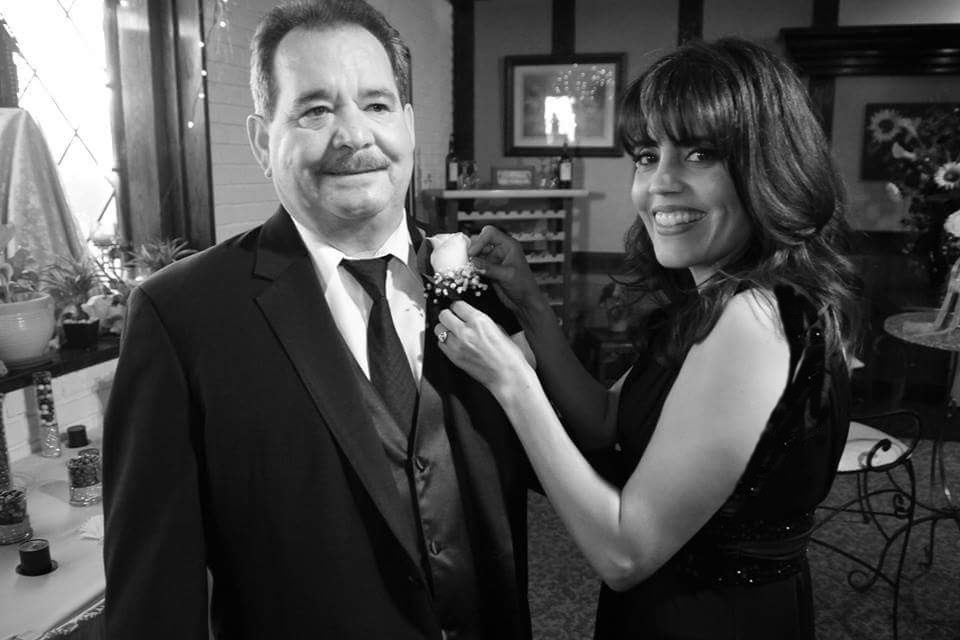
How the Death of a Loved One Changes You
It’s been more than two years and five months since my Dad died. I still find it impossible to fully fathom what that means and grasp the permanence of even saying — and writing — that phrase. When you experience the death of a loved one, you not only lose the person, but you also lose a piece of who you were before the loss.
Since April 30, 2018, I have been trying to make sense of my new reality without my Dad. There’s no eloquent way to acknowledge my Dad’s passing. It’s excruciating. And I need to express this internal pain to help my own healing.
Up until that fateful moment when my brother called me and told me that our Dad was on life support, I hadn’t a clue about how deep my emotional pain and longing could go.
After the call, as my husband stood by my side, the first and only thing I blurted out as tears rushed out of my eyes was, “I love my Dad, I love my Dad, I love my Dad, I love my Dad, I love my Dad.”
It was a spontaneous mantra I couldn’t stop repeating. I was overcome with emotion and the realization that the core of my being had changed.
In an instant, the brutal fist of mortality punched me in the gut and I was going to have to catch my breath before I could confront this painful truth. And it wrecked me.
I didn’t know what life would be like without my Dad because he knew me before I knew myself. Dad was always there.
The Death of My Dad Made Me Look at Life in a Whole New Way
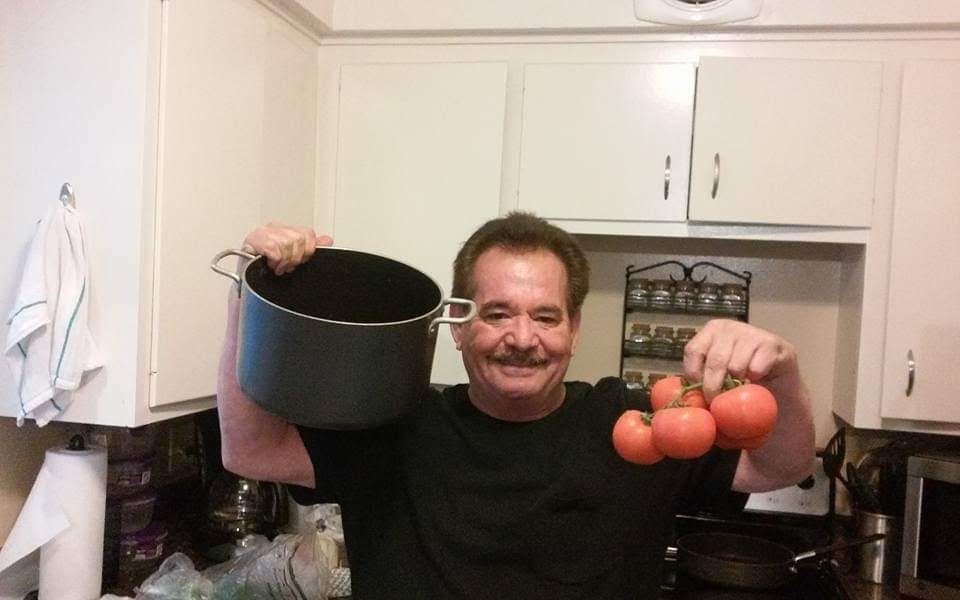
My wonderful dad ready to cook. He was so proud of his homemade chili (and for good reason). It was the best!
The reality of death is around us more than ever. During this pandemic and COVID-19 crisis, there’s no way to escape it. We see the numbers rise, we hear the agonizing stories, we read the depressing news, and on it goes. And after a while, the enormity of it all almost has a desensitizing effect. It’s too much for our brains to handle. Another thousand dead, another hundred gone.
But when I pause for just a moment and truly ponder what is happening, I begin to realize that what happened to me when my Dad died is happening all over the world. Here we all are. Experiencing the death of a loved one, trying to make sense of what has transpired and figure out how to feel, what to think, where to go in our spiritual path for guidance, understanding, and hopefully, comfort.
Today, my husband and I walked our local cemetery as we have been doing regularly since this pandemic struck as it’s one of the only places for solitude in a city teeming with crowds. As we were leaving, we saw a group of people, about five of them, gathering at a new grave. They had balloons and flowers and even fold-out chairs.
At that moment, I felt very sad and started crying for them. For the loss that they must be feeling. For the aching emptiness that is now a very real part of their lives. I felt connected to them in our mutual grief. Even though they don’t know me or my Dad and I don’t know them and their loved one whose grave they now visited, we have this common thread that ties us together.
When My Dad Died, My Naïveté Died Too
Even though it’s been years, sometimes I’ll start tearing up when I look at photos. I think, “Is this all I have left of my Dad? Is he really only a photo now?”
I don’t want my Dad to be a mere memory — I don’t want to simply remember the good times. I want them to still happen. I want him to still be here. I want to be able to reach him!!!
That is one of the most crushing parts of the death of a loved one. The inability to reach them. When they were here, you could call them or text them or email them or leave a comment on Facebook. But what do you do now? Where do you reach them? How do you reach them?
There’s actually a new thing called grief tech, which is designed to help people process, commemorate, or even continue interacting with those who’ve died.
But it’ll never be the same thing as having them here.
It’s an ugly feeling not being able to reach the one you love. And it’s so permanent. That’s what hurts the most. Even if you believe in an afterlife, there is no way around death. It’s an impenetrable wall that you will never be able to climb over or circumvent.
Not Being Able to Reach Your Loved One Is the Most Painful Part
I have photos of my Dad in our place. Not many, just a few. But they are very special photos. And it’s interesting that I still can’t really look at them. I glance at them when I’m cleaning the house or even just watching TV, or passing by them.
But if (and when) I look carefully at them, I can’t help but cry even though they are happy photos. It’s almost like the good memories of all the fun times make the loss that much more painful. Because it reminds me yet again of what is no longer possible with him.
Of course, not everyone experiences grief and loss the same way. I imagine some people must have more of a matter-of-fact approach and perhaps don’t dwell on it much. Others maybe are more capable of “handling” the pain because of their faith and spiritual beliefs.
No matter what one believes, the death of a loved one is a universal experience that all of us will have at some point in our lives, which somehow makes it more bearable. It’s a reminder that we’re not alone, even though grief can make us feel that way.
I don’t really have any answers. Instead, I have more questions about how the death of a loved one changes you. Or, rather, how the death of my loved one — my Dad — has changed me and will continue to change me.
What I do know is this: I not only lost my Dad, I lost a part of who I was before his death — and ultimately, I’m choosing to turn that sorrow into strength. It’s a choice I have to make daily.
I have deep empathy for others because I now know the profound reality of loss. I’m aware of just how ephemeral life is, which brings me an even greater appreciation for every moment. I have a constant sense of the bigger picture, which gives me perspective and makes it much easier to let go of the small stuff. Because that’s all it is — stuff.
I’ve learned that it’s possible to grow from the depths of your sorrow and flourish into a more fully alive person in ways you hadn’t even imagined.
For all of these changes, and so much more, I am forever grateful to my Dad.
Here’s a poem I wrote one night thinking about the meaning of life and death:
Why do people turn into photos?
For days and years they are here
Then you turn the page
And they disappear
Some atom by atom, bit by bit
Others exit in an instant
Is this how our life story ends?
Some sad twist of fate, no more time to spend
In the big picture of life
We really are so small
Nothing more than images on a wall —
Whether forgotten or remembered
It happens to us all.
Here’s an excerpt from a poem called “Kindness” by Naomi Shihab Nye that beautifully expresses what I feel:
Before you know kindness as the deepest thing inside,
you must know sorrow as the other deepest thing.
You must wake up with sorrow.
You must speak to it till your voice
catches the thread of all sorrows
and you see the size of the cloth.
Then it is only kindness that makes sense anymore,
only kindness that ties your shoes
and sends you out into the day to gaze at bread,
only kindness that raises its head
from the crowd of the world to say
It is I you have been looking for,
and then goes with you everywhere
like a shadow or a friend.
I also created a list of poems and books on grieving that have brought me some comfort. I hope they help you too.

Lifestyle writer and editor Mar Yvette wants to help you make every moment pop!